ibigw@ueiibi.com
0086 10 63701497
English
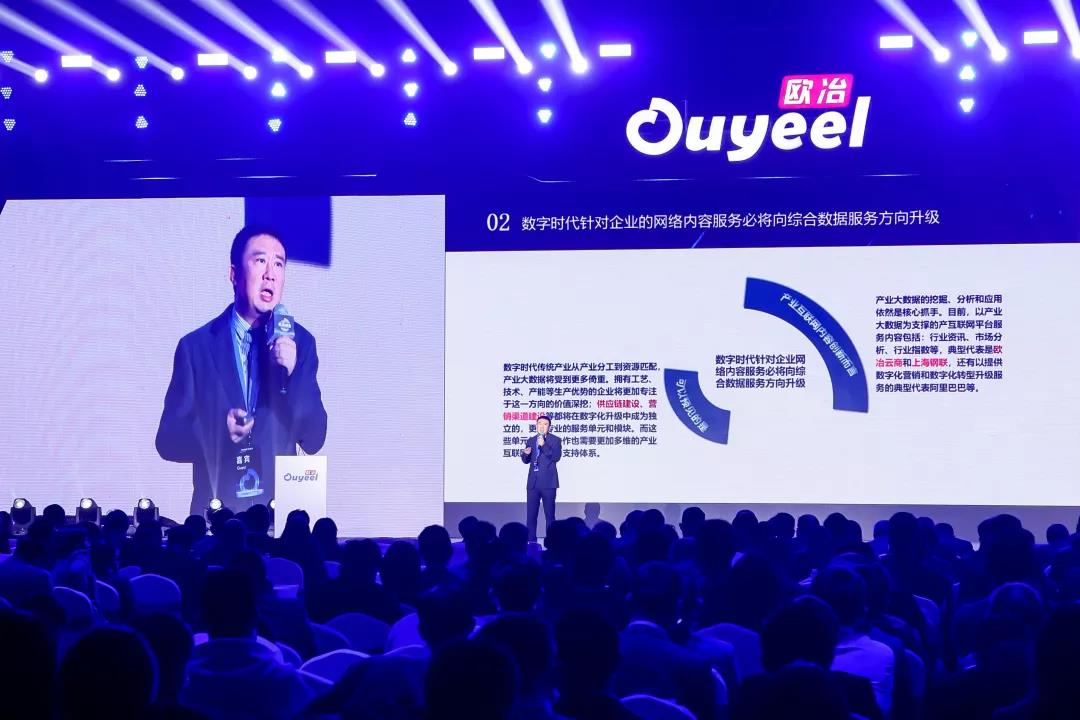
On December 21, 2021, Ebrun Think Tank held the Dual-Line Release Conference of the “2021 Industrial Internet Development Report” at the Beijing Marriott Hotel. The report, jointly released by Ebrun Think Tank, the Tsinghua University National Engineering Laboratory for E-commerce Technologies, and the Yangtze River Delta Industrial Digital Innovation Center, represents a major research achievement in the field of industrial internet for the year.
Attendees included Zheng Min, Chairman of Ebrun and Dean of Ebrun Think Tank; Pan Yong, Board Secretary and Senior Vice President of IBI; Xue Suwen, Chairman of Nongxin Internet; and representatives from leading primary and secondary market institutions.
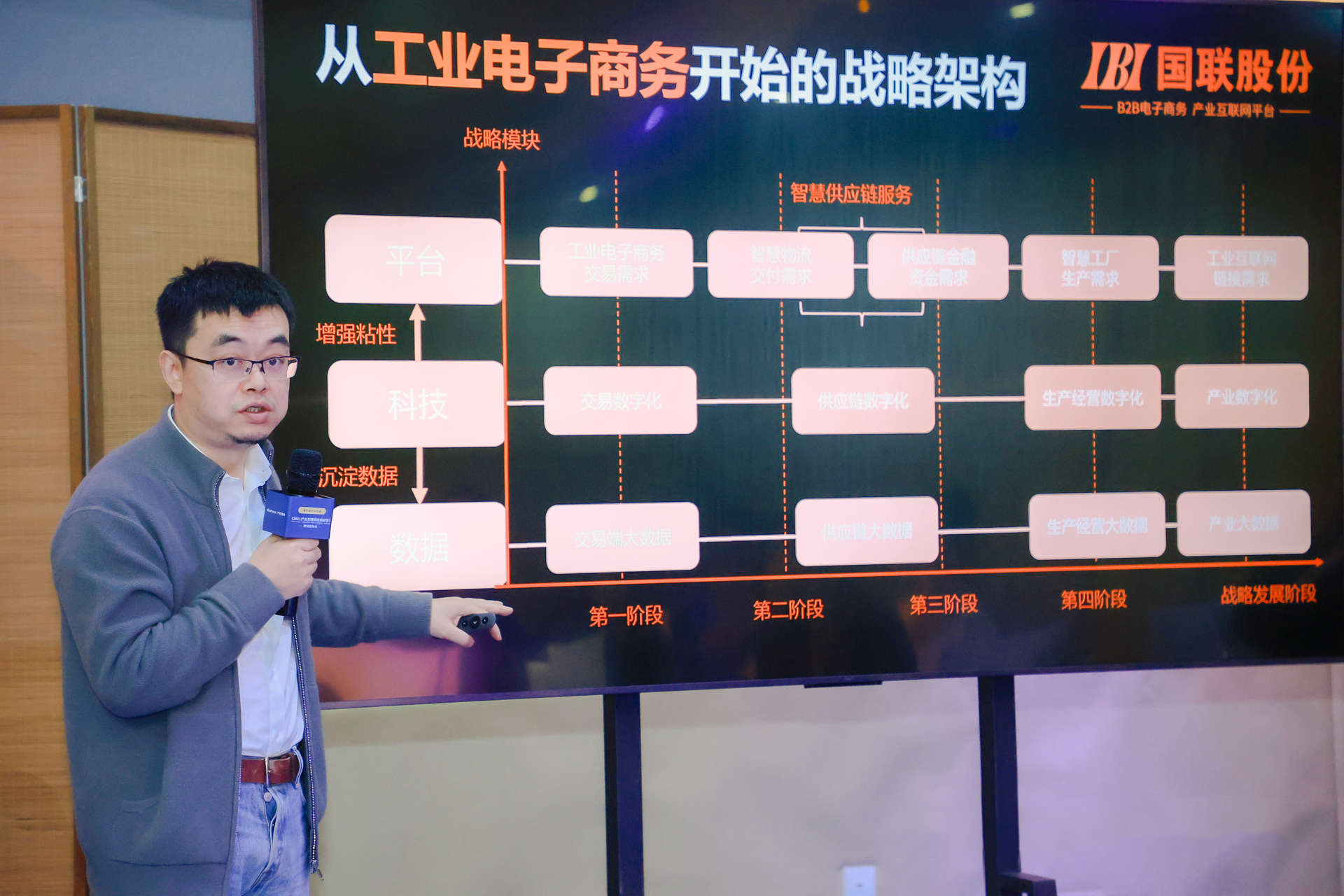
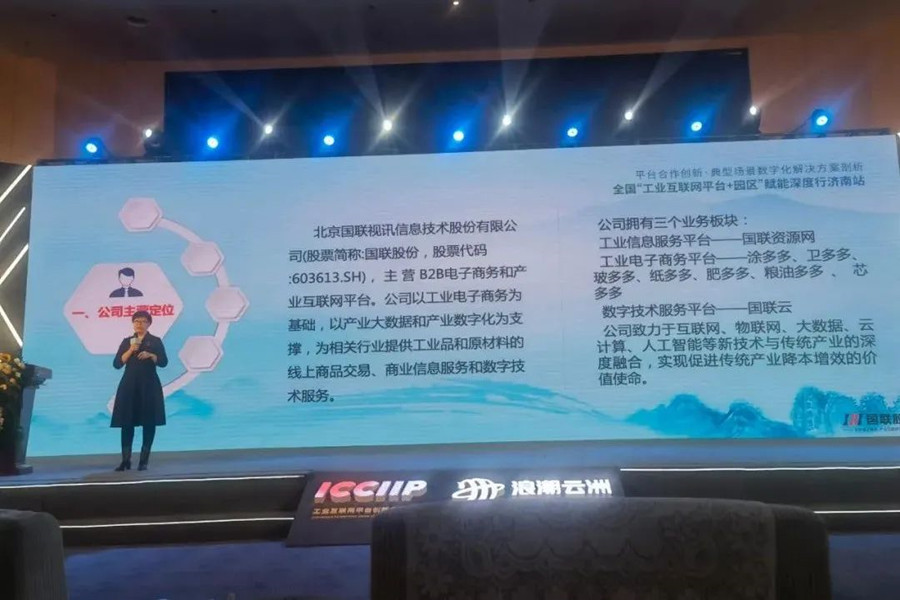
During the event, Pan Yong delivered a keynote speech titled “A-Share Case Study: The Value and Layout of Factory Digitalization.” Drawing on IBI’s strong performance in industrial digitalization and practical technology applications, he provided in-depth insights into the mindset and frontier trends that traditional enterprises should adopt when advancing digital transformation.
Pan emphasized that digitalization should not exist for its own sake. Its purpose is to solve industrial and enterprise-level problems, and its ultimate manifestation lies in data. The digitalization process, he noted, is about building data accumulation channels and data acquisition capabilities—and the industrial internet platform is the natural carrier for realizing digital services.
According to Ebrun Think Tank, this is the third consecutive year of publishing the Industrial Internet Development Report. The 2021 theme, “Seeing the Value of Digitalization,” builds on the previous year’s theme of “The New Paradigm.” The earlier report first categorized the industrial internet into 3+1 models—networked intelligent manufacturing, digital supply chains, dual-capability brands (smart customization or agile response), and intelligent digital enterprise services. This year’s edition identifies the value release points of industrial digitalization that drive the sector’s rapid growth.
As an A-share listed benchmark enterprise in the industrial internet sector, IBI is currently advancing digital transformation through its Cloud Factory initiative. The company has signed digital cloud factory cooperation agreements with over 20 enterprises and plans to roll out 100 digital cloud factories within the next three years.
In his speech, Pan also revealed that IBI will continue to explore the full construction of digital tool systems and the industrial-chain ecosystem. He stressed that trust built through e-commerce transactions is the foundation of collaboration, which should then extend to digital supply chain services and deeper understanding of enterprise pain points to achieve effective digitalization step by step.
As a senior expert in the industrial internet field, Pan also engaged in open dialogue with emerging companies in the sector. He encouraged entrepreneurs to focus on what problems their companies are solving for the industry and what tangible value they bring.
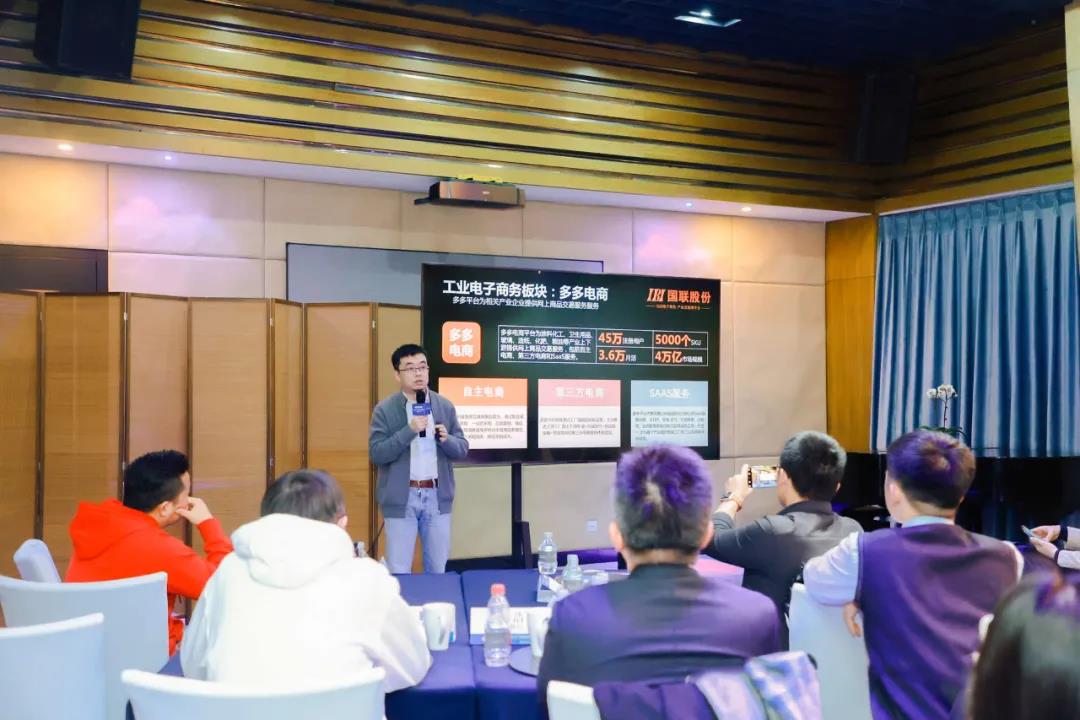
“Even if you’re not yet profitable or your revenue is modest,” he said, “if your value contribution is precise, you’ve found your breakthrough point. With the right tactics and disciplined execution, sustainable growth will follow.”
Pan concluded that data defines the future of industry, and that industrial internet platforms—through deep understanding of traditional industries and mastery of digital technologies—will continue to serve as the bridge between real-world operations and digital transformation, propelling the evolution of China’s industrial digital economy.
Speech Transcript
Hello everyone! I remember back in 2019, when our company had just gone public and we were still doing roadshows, the question we were asked most often by the capital market was: “Why is it that only you can maintain such rapid growth?”
And today, standing here at this event hosted by Mr. Zheng, we can clearly see that besides us, there are many other companies in the same field performing excellently—they just haven’t gone public yet.
At present, the primary market for industrial financing is extremely active, with many enterprises already entering the registration process. When I visited Shenzhen in September, a fund manager told me, “We’ve only enjoyed the fundamentals of being a good company, but almost none of the valuation premium from the track itself.”
Many of you here, while studying industrial internet enterprises, must have encountered a recurring challenge—the difficulty of integrating multidisciplinary knowledge. You may be well-versed in internet business models, but not as familiar with traditional industries. Thus, the logic behind our business growth may not fit neatly into your existing conceptual frameworks. As more industrial internet companies go public, this gap in understanding will only become more critical.
This brings us to several recurring questions I’ve often discussed over the past two years: What exactly is the industrial internet? How does it differ from e-commerce or the industrial internet in the narrower manufacturing sense? And how do the various definitions issued by different government departments relate to one another?
During my exchanges with Mr. Zheng, he made an excellent point: this entire effort requires the government to act as a policy-level coordinator, working with enterprises like ours to unify definitions so that a coherent understanding can cascade downward from the top.
In the report, Mr. Zheng also mentioned two concepts that align perfectly with my own views. The first is that transactions are the core. All internet platforms must pass through this stage; none can bypass it. Transaction and capital flows are the most fundamental needs of enterprises—in some industries, such as steel, they are even more critical. Therefore, practitioners of the industrial internet cannot ignore the inherent development logic and operational patterns of traditional industries. We must build our internet models upon these foundations.
The second is digitalization. This forms the key architectural pillar of our strategic system. IBI’s Duoduo platform differs from many other industrial internet platforms in that it focuses on large-scale raw material transactions—a segment that has no direct counterpart either domestically or internationally. When it comes to digitalization, early-stage SaaS development in China primarily focused on state-owned enterprises, leaving small and medium-sized enterprises largely underserved. I categorize these systems into two types: closed platforms and open platforms.
Closed platforms, such as those of central SOEs, are built around their own supply chains. By contrast, IBI’s Duoduo platforms operate in an open ecosystem, bringing together diverse enterprises to form a unified digitalized industrial network. This is far more complex, requiring clear strategic levers and a well-defined system of value contribution.
In Mr. Zheng’s report, each case study explicitly notes what industry problem a company has solved. Similarly, when Mr. Xue and I present our work, we emphasize what value we bring to industrial enterprises and how we solve their problems. That, in essence, is the grasp and core value of the industrial internet.
I also oversee our company’s investment and financing operations. When we evaluate other enterprises, what we care most about is: what problems are you solving within your industry? What tangible value are you delivering? Even if a company currently lacks profit or its revenue seems modest, as long as its value contribution is precise, it has already found a strong breakthrough point. With sound strategy and disciplined execution, sustainable growth will follow.
Let me briefly introduce IBI’s journey. Founded in 1998 and restructured into a joint-stock company in 2002, IBI began as an industrial media enterprise providing media services to various vertical industrial sectors. This foundation established our industrial DNA, which we have never abandoned since.
In 2006, we carried out our first transformation under the principle of “adversity drives innovation.” Facing a steep revenue decline in 2005–2006, we launched IBI Resource Network, modeled after Alibaba’s 1688, which we call our B2B 1.0 information service model. Revenue came mainly from advertising, memberships, and event fees. This model remained effective until around 2013, when it hit a ceiling.
In 2011, as the “Internet Plus” concept emerged, we launched online membership services and discovered that many enterprises strongly desired digitalization support. We then formed a technical team dedicated to enterprise information system development—many of our current SaaS codebases originate from that period.
By 2013, growth had slowed again. Realizing the limitations of the 1.0 model, we began our second transformation in 2013, launching the Toodudu platform at the end of 2014. By 2015, growth accelerated sharply, supported by over RMB 200 million raised via the NEEQ. Despite going public on July 30, 2019, we still consider ourselves a company in the early entrepreneurial stage.
I divide IBI’s evolution into three phases: first, gaining industry influence through transactions; second, building higher competitive barriers through digitalization; and third, achieving industrial authority through data-driven operations. For example, Toodudu focuses on three major product chains: titanium, alcohols, and resins. Starting from titanium dioxide, we’ve expanded across the entire titanium chemical value chain. Every enterprise within this ecosystem may occupy overlapping roles—both as a supplier of raw materials and as a sales partner—creating deep mutual interdependence.
This dual-sided partnership forms strong business stickiness, which greatly enhances trust and facilitates the acquisition of high-quality data for digital transformation.
The ultimate goal of digitalization is data. To achieve this, one must provide diversified services that strengthen collaboration and trust among enterprises—only then will they accept your digital solutions. If you have no prior service relationship and immediately propose a digitalization plan, most companies—especially SMEs—will find it difficult to accept. Digitalization is not an end in itself; its purpose is to build data accumulation channels and enhance data acquisition capabilities.
Why is data so important? Because the future of every industry will revolve around it. Only those capable of serving and managing core industrial data resources will become the central drivers of industrial operation. Thus, industrial internet platforms are the practical landing vehicles for digital services.
Within the industrial ecosystem, there are various types of players. Some focus solely on digital tools—SaaS providers or IT firms whose strength lies in technical development. However, these often face deployment challenges, as each vertical industry has its own logic and knowledge framework. Without deep understanding, such tools cannot meet real industrial needs. Generic software rarely achieves deep adoption. Industrial internet platforms succeed precisely because they combine profound industry insight with technological expertise, enabling them to identify core problems and propose effective, integrated solutions.
We act as system integrators, helping partners structure their industry-specific knowledge, bridge product–demand gaps, and build complete frameworks—because we understand both industry and technology. Once transactional relationships are in place, it becomes much easier to propose supply-chain digitalization, covering production, logistics, and warehousing. Enterprises accept this because it directly improves efficiency.
After digitalizing supply chains, enterprises often seek further expansion—whether by optimizing internal management or building new facilities. At that point, implementing full digitalization from the ground up becomes natural. The final step is establishing a profitable model, integrating digitalization directly into transactions.
Our main tactical focus today is the “Cloud Factory” initiative. By strengthening supply-chain cooperation and leveraging our PTDCloud Industrial Internet Solution, we use digital twin technology to simulate production processes entirely in the data layer. In the future, AI and business intelligence will enable all production workflows to operate within this digital system.
We have drawn several insights from this process. First, the entry point is trust. Data sharing and digital adoption depend on confidence and a sense of shared benefit, which take time to establish. Second, priority should be given to supply-chain digitalization, as it is most closely tied to SMEs’ real and urgent transactional needs. Third, one must deeply understand enterprise pain points—only targeted solutions can persuade and deliver value.
Digitalization must also follow the right rhythm. It should be implemented step by step, aligned with actual business needs. For example, our “QueuePass” app allows trucks within 5 km of a factory to automatically queue, register, and pass checkpoints via cameras—dramatically improving logistics efficiency during peak seasons.
We also developed digital inspection equipment that reduced testing time from three or four hours to just twenty or thirty minutes. Results are uploaded and bound to each batch for online traceability, eliminating redundant re-checks, reducing trust costs, and improving delivery efficiency across the entire value chain.
In addition, we launched an energy consumption digitalization project, enabling enterprises to benchmark their own performance against industry averages—helping them understand where they stand.
Building a digital ecosystem requires collaboration. While our supply-chain systems are proprietary, we partner on inspection, energy, and future safety monitoring initiatives. Execution capability is therefore vital in every cooperation.
Industrial scaling must be based on customization. Most enterprises avoid customization because of high costs, but for IBI, once we complete a customized digitalization project within a given industrial chain, we can replicate it across dozens of enterprises—sharing costs and amplifying impact.
We are now conducting digital transformation pilots across different parts of the value chain. Our goal is to achieve interconnected logistics, capital, and information flows through integrated digital tools.
In closed ecosystems, large state-owned enterprises hold significant power, but in open ecosystems, countless other enterprises also need platforms and tools to achieve connectivity—and this is precisely the mission of industrial internet platforms.
To conclude, digitalization defines the future.
Thank you, everyone.

 Cross-border