ibigw@ueiibi.com
0086 10 63701497
English
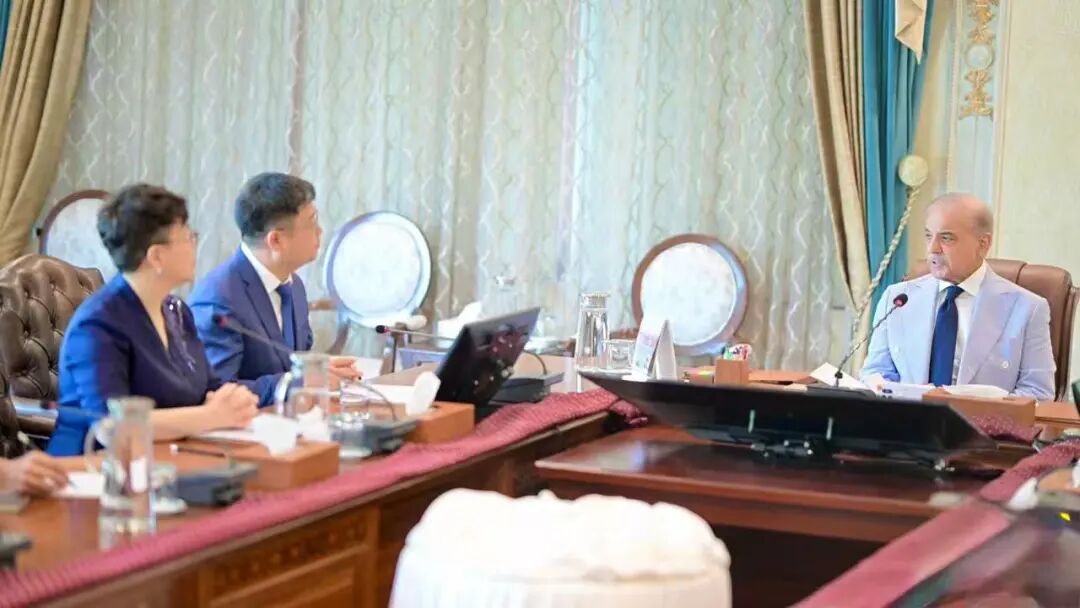
This year marks the 75th anniversary of the establishment of diplomatic relations between China and Pakistan, while the upgraded “CPEC 2.0” phase of the China–Pakistan Economic Corridor continues to gather momentum. On May 13, the IBI Pakistan Digital Economy Headquarters was officially inaugurated in Islamabad, Pakistan. Pakistani government officials attended the launch ceremony and delivered remarks. Officials from the Chinese Embassy in Pakistan, representatives from relevant Pakistani ministries, and delegates from more than 200 leading enterprises from both countries gathered to witness this significant milestone in China–Pakistan digital economy cooperation.
The launch of the project has injected new digital and industrial vitality into the building of the China–Pakistan Community with a Shared Future.
Khalil Hashmi, Ambassador of Pakistan to China and a frequent visitor to IBI, stated that IBI’s stable, healthy, and dynamic development serves as a model for implementing the China–Pakistan All-Weather Strategic Cooperative Partnership. He described IBI as a bridge and bond connecting enterprises of both countries. Through its deep engagement in China–Pakistan digital industrial cooperation, regular integration of government and business resources, and large-scale facilitation of enterprise partnerships, IBI has successfully transformed national strategic agreements into tangible industrial cooperation outcomes.
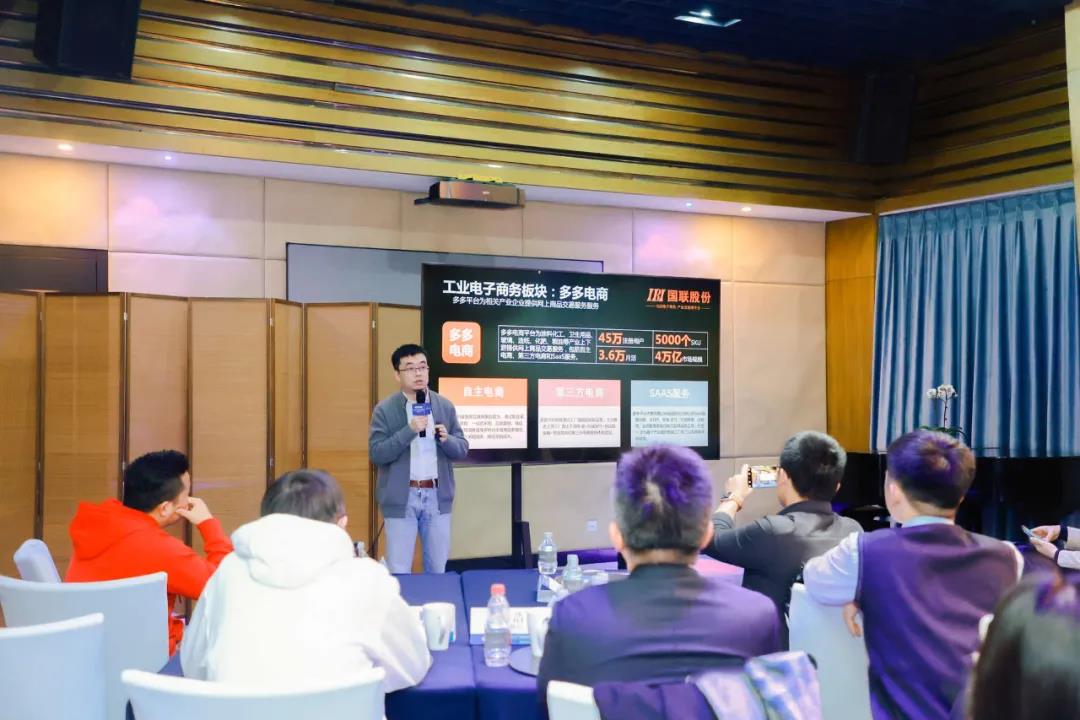
To address information barriers, geographical limitations, and inefficiencies in cross-border business matchmaking, the organizers arranged a series of intensive industrial matchmaking events in Islamabad, Lahore, and Karachi. These activities covered key sectors where China and Pakistan enjoy strong complementary advantages, including chemicals, textiles, renewable energy, building materials, electronics, and automobiles, helping enterprises from both countries accurately identify opportunities and unlock new cooperation potential.
The establishment of digital platforms and the enhancement of end-to-end service capabilities have also effectively supported the international expansion of Chinese SMEs. Leveraging IBI’s extensive membership network, a large number of high-quality SMEs have gained access to efficient and cost-effective pathways for overseas development.
Zhang Jie, Chief Technical Engineer of a Chinese additives manufacturing company, shared his experience. He noted that while his company had long intended to enter the Pakistani market, it faced significant challenges related to limited market information, complex customs procedures, and legal and compliance differences. Through IBI’s cross-border industrial belt strategy and its innovative “Twin Parks in Two Countries” model, the company successfully secured a Pakistani partner and launched a project under an innovative platform-investment and joint-operation framework. The project is expected to generate annual output value exceeding RMB 100 million this year, representing a successful transition from uncertainty about overseas expansion to precise market entry and stable operations.
“China’s mature industrial chains, supply chain advantages, and digital operational capabilities are highly aligned with Pakistan’s urgent needs for industrial upgrading and industrial digital transformation,” said Qian Xiaojun, Founder and CEO of IBI.
He emphasized that Pakistan is the first key destination in IBI’s global expansion strategy and a strategic gateway for the company’s deep engagement with Belt and Road markets. The newly launched IBI Pakistan Digital Economy Headquarters will leverage its mature “6+N” full-chain service system to provide enterprises from both countries with one-stop, end-to-end services, including cross-border trade, intelligent logistics, digital supply chain development, AI empowerment, joint venture facilitation, and investment compliance support. It will also establish a platform for business exchanges and cooperation between China and Pakistan, comprehensively empowering industrial ecosystem co-development and shared prosperity.
At present, China and Pakistan are strengthening cooperation under the Action Plan for Building an Even Closer China–Pakistan Community with a Shared Future in the New Era (2025–2029). The establishment of the IBI Pakistan Digital Economy Headquarters aligns closely with the strategic development priorities of both countries and has become an important platform for industrial digitalization cooperation during the CPEC 2.0 phase.
The platform integrates functions including trade facilitation, investment promotion, supply chain digitalization, SME empowerment, and policy dialogue. It is expected to reduce risks associated with cross-border cooperation, improve the efficiency of industrial collaboration, and promote the healthy development of the China–Pakistan digital economy ecosystem.
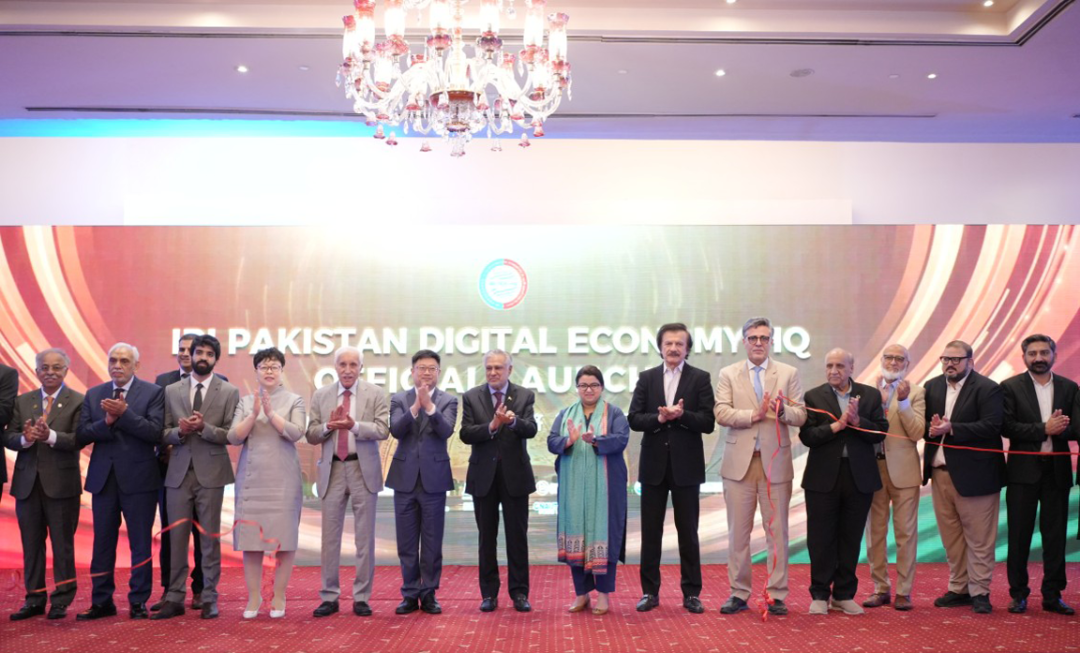
At the launch ceremony, Liu Zhai, Director and Senior Vice President of IBI, stated that the company will continue promoting deeper integration of industrial demand between China and Pakistan and create a benchmark model for cluster-based overseas expansion by private enterprises.
She noted that IBI is committed to ensuring that China–Pakistan friendship continues to flourish through industrial cooperation and digital empowerment. According to the organizers, more than 110 cooperation agreements were signed during the event. The enthusiastic atmosphere of collaboration demonstrated the strong momentum generated by the deep integration of China’s high-quality industrial capacity and digital technologies with Pakistan’s local industries. This growing synergy is continuously injecting fresh digital momentum and industrial vitality into the China–Pakistan All-Weather Strategic Cooperative Partnership in the new era.

 Cross-border