ibigw@ueiibi.com
0086 10 63701497
English
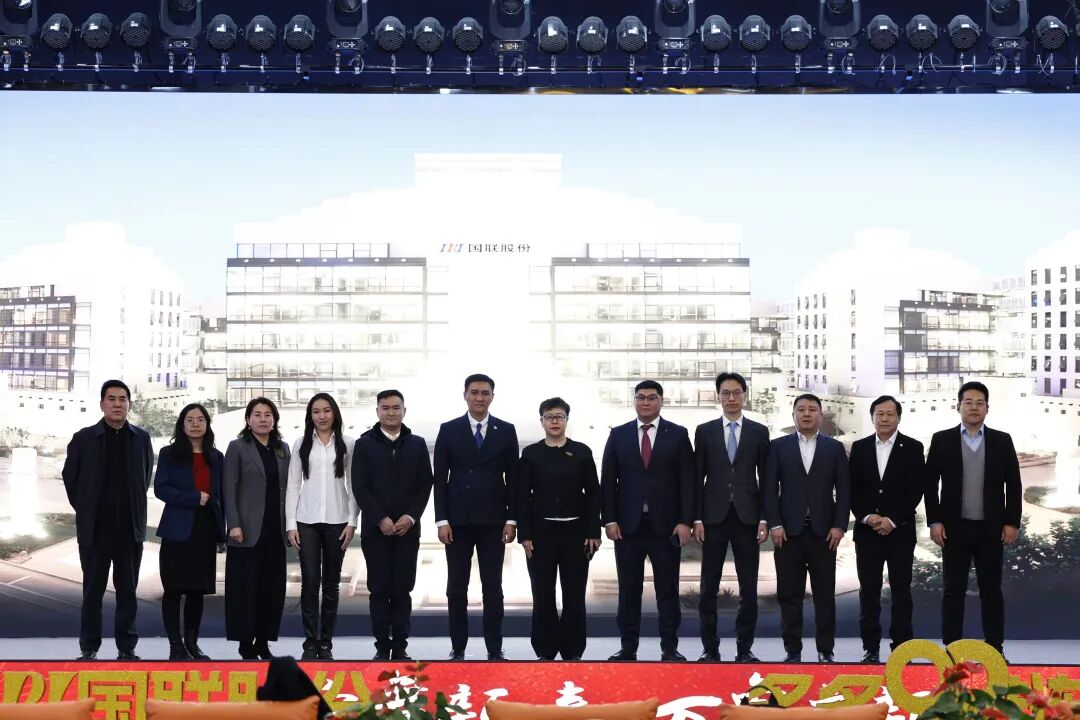
To thoroughly study and implement the guiding principles of the Fourth Plenary Session of the 20th CPC Central Committee, act on General Secretary Xi Jinping’s important exposition on developing new quality productive forces, and advance the deep integration of Party building with business development, the Department of Consumer Goods Industry of the Ministry of Industry and Information Technology (MIIT), the Beijing Municipal Bureau of Economy and Information Technology, and the Party branch of IBI jointly carried out a themed Party Day activity on December 24, 2025.
The event, combining on-site research visits with symposium discussions, focused on key topics such as the role of the industrial internet in empowering the digital transformation of the consumer goods industry and supporting enterprises in going global. Through in-depth exchanges, participants built consensus, clarified directions for collaboration, and jointly explored pathways to enhancing the global competitiveness of China’s consumer goods industry.

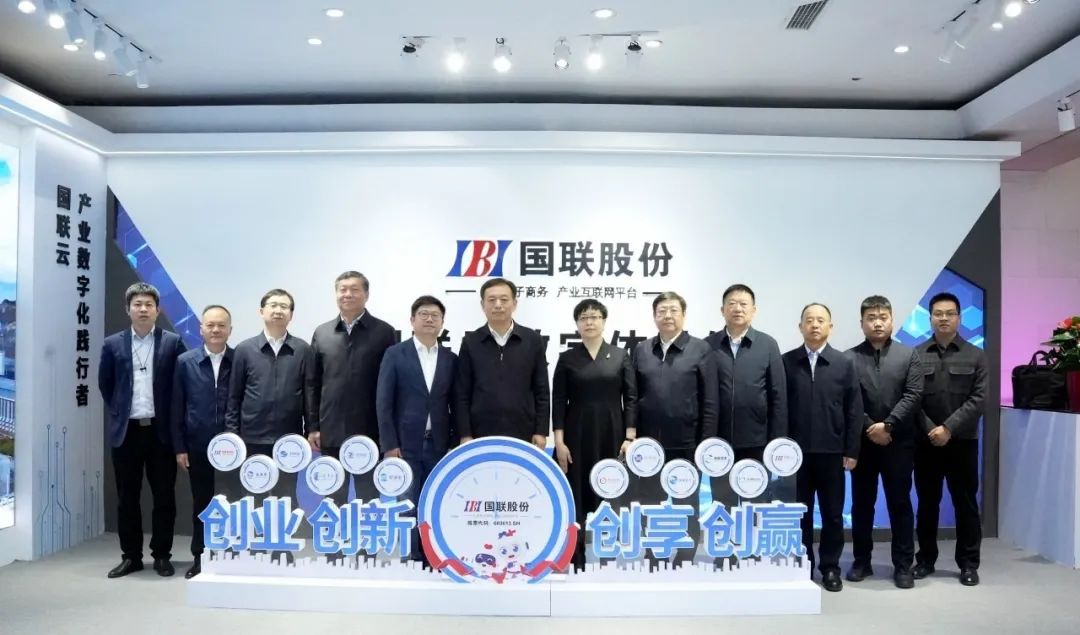
At the outset of the event, a delegation led by He Yaqiong, Director-General of the MIIT Department of Consumer Goods Industry, and Wang Bin, Deputy Director-General of the Beijing Municipal Bureau of Economy and Information Technology, visited the IBI Digital Economy Exhibition Hall, accompanied by Qian Xiaojun, Founder and Chief Executive Officer of IBI.
The delegation gained a comprehensive understanding of IBI’s more than 20 years of development in the industrial internet sector, its overall business layout, and its innovative achievements. Particular attention was given to platforms closely related to the consumer goods industry, including Wdoodoo, Zdoodoo, Feidoodoo, and Lydodo. Through the visit, the delegation observed firsthand how digital technologies are deeply embedded across industrial chain segments and how these platforms effectively empower small and medium-sized enterprises to achieve transformation and upgrading.

During the symposium, Qian Xiaojun extended a warm welcome to the attending leaders on behalf of IBI. He noted that since the 18th National Congress of the CPC, the Party Central Committee has placed strong emphasis on the integrated development of the digital economy and the real economy, providing clear guidance for advancing new-type industrialization. As a key sector that safeguards livelihoods and stimulates consumption, the consumer goods industry relies heavily on both policy guidance and digital empowerment for transformation and upgrading.
Qian emphasized that IBI has consistently aligned its platform strategy with national industrial policies, focusing on three major growth trajectories—industrial e-commerce, industrial digitalization, and cross-border industrial cluster expansion—to build a new industrial internet ecosystem. He stated that the joint themed Party Day activity provided a valuable platform for deepening government–enterprise collaboration and expressed IBI’s commitment to advancing new-type industrialization under policy guidance.
He Yaqiong highlighted that the joint themed Party Day activity represented a vivid practice of MIIT’s founding principle of promoting the integration of industrialization and informatization. As a leading enterprise in the industrial internet sector, IBI’s achievements in digital development offer valuable insights for government departments seeking to optimize services and drive industrial upgrading.
He pointed out that fostering new global competitiveness in traditional industries such as textiles and light industry is a key task in implementing the spirit of the Fourth Plenary Session of the 20th CPC Central Committee. This requires close government–enterprise collaboration, stronger data-driven thinking, and deeper integration. She expressed hope that continued cooperation would help Chinese manufacturing expand globally and take a leading role internationally, contributing jointly to the high-quality development of the consumer goods industry.

Wang Bin affirmed IBI’s achievements in both Party building and business development. She encouraged the company to further expand Party member coverage, optimize Party member management mechanisms, and better align corporate development with regional industrial planning. She also suggested that IBI seize the development window of the industrial internet, consolidate its advantages in information and data resources, expand digital services and overseas market布局, and regulate business revenue consolidation. Leveraging Beijing’s resource advantages, IBI was encouraged to build large-scale integrated R&D entities and further develop new service models such as data services and think-tank services, injecting momentum into the new development paradigm.

During the interactive exchange session, government and enterprise representatives engaged in in-depth discussions on core issues including the digital transformation of the consumer goods industry, enterprise globalization, and precise policy alignment. Representatives from relevant divisions of the MIIT Department of Consumer Goods Industry noted that IBI’s digital model provides an effective solution to common SME challenges—“wanting to transform but not knowing how, or lacking the resources to do so.”
They emphasized that IBI’s practices in cold-chain logistics optimization, the construction of digital industrial chains in Xinjiang, and the development of overseas warehouse service networks offer important references for improving quality and efficiency in the consumer goods industry and for expanding into international markets. In response to industry development needs, representatives expressed hope that IBI would share industry data resources, summarize and promote digital transformation experiences, and jointly explore digital potential in sectors such as food processing, supporting high-quality Chinese brands in going global.
Serving as a bridge through Party building, the joint themed Party Day activity established a solid platform for deep government–enterprise engagement and clarified practical pathways for collaborative industrial upgrading. Going forward, IBI will continue to deepen the integration of Party building and business development, closely follow national policy directions, and work hand in hand with government departments to address industrial development challenges, build a new industrial internet ecosystem, and contribute to the high-quality development of the consumer goods industry and the advancement of new-type industrialization.
 Cross-border