ibigw@ueiibi.com
0086 10 63701497
English
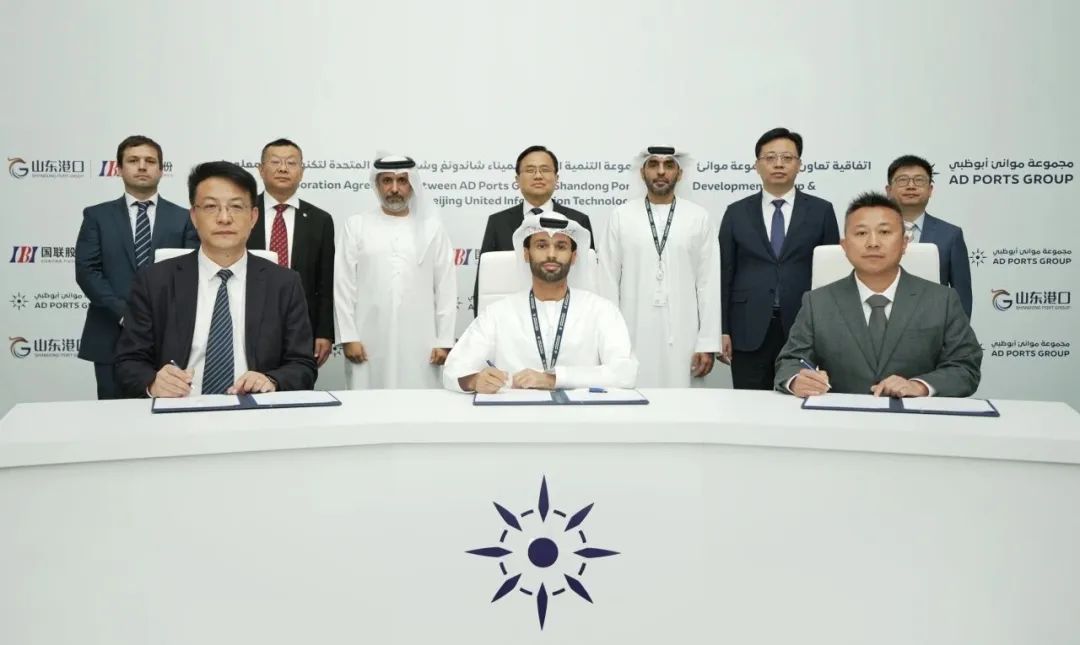
On the morning of November 23, 2023 (local time, UAE), Qian Xiaojun, Founder, CEO & President of IBI, together with Zhang Wei, Vice President of Toodudu and Head of the Automotive Equipment Industry Chain, signed a tripartite Memorandum of Understanding (MoU) at Khalifa Port KEZAD Free Trade Zone in Abu Dhabi, United Arab Emirates. The signing took place in the presence of Song Junji, Vice Governor of Shandong Province, and Chen Fei, Director of the Shandong Provincial Department of Commerce.
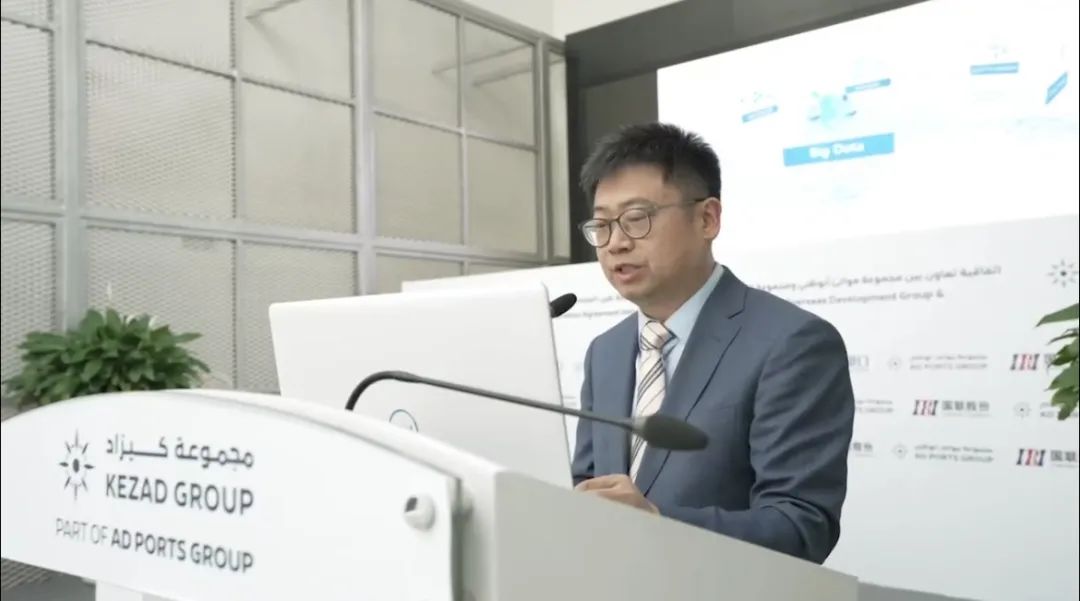
IBI, Shandong Port Overseas Development Group, and Abu Dhabi Ports Group reached a cooperation intention on cross-border business for China’s automotive equipment industry chain in the UAE, covering imports/exports and re-exports, overseas warehousing, logistics and distribution, product exhibitions, and online platforms. The signing of this MoU aims to integrate the strengths of all three parties, actively contribute to the Belt and Road Initiative, and create a new model for cross-border digital supply chain cooperation.
About Abu Dhabi Ports Group and Shandong Port Group
Abu Dhabi Ports Group is the primary operator of ports, economic cities, free trade zones, and logistics in the UAE. It manages multiple ports, industrial zones, logistics centers, and shipping companies across Abu Dhabi, serving as a key pillar of the region’s economic development. With diversified businesses and continuous innovation, the group provides efficient and reliable services to regional and international customers.
Shandong Port Overseas Development Group, under Shandong Port Group, bears the responsibility of implementing Shandong’s international development strategy. In line with President Xi Jinping’s directive to “accelerate the construction of a world-class marine port,” Shandong Port Group was established in August 2019. By 2022, its cargo throughput exceeded 1.6 billion tons and container volume surpassed 37 million TEUs, ranking first in the world and third globally, respectively. The group operates 327 container shipping routes, maintains close connections with more than 180 countries and regions, and has established 32 inland ports and 82 sea-rail intermodal train routes. It has also successfully operated overseas projects such as the Guinea Alumina Corporation bauxite port and the Khalifa Port Container Terminal Phase II in Abu Dhabi, and established friendly port relations with 40 ports worldwide.
Remarks from the Signing Ceremony
Abdullah Al Hameli, CEO of Economic Cities & Free Zones at Abu Dhabi Ports Group, emphasized that Abu Dhabi Port, as a key hub in the Middle East, is strategically located, highly diversified in cargo handling, and operates as a comprehensive port with both passenger and cargo functions. He noted that Abu Dhabi Ports Group will provide land for warehousing, product showrooms, and port operation services according to business needs, supporting the continued development of China’s Belt and Road Initiative in the Middle East.
Li Fengli, Deputy Party Secretary, Director, and General Manager of Shandong Port Group, recalled the long-standing cooperation between Shandong Port Group and Abu Dhabi Ports. In April 2019, Qingdao Port under Shandong Port, together with COSCO Shipping, invested in and operated the Khalifa Port Container Terminal Phase II, marking a new chapter in bilateral cooperation. On December 14, 2021, the two ports established a sister-port relationship, and on November 11, 2022, the maiden voyage of the vessel Safeen Power launched the “Far East–Middle East” route, further deepening ties. Li added that Shandong Port Overseas Development Group has been working closely with IBI in developing cross-border automotive equipment industry chains, through resource sharing, business synergy, and complementary strengths. He expressed hope that the tripartite MoU will strengthen communications, promote comprehensive cooperation, and make positive contributions to China–UAE economic cooperation, cultural exchange, and the stability of global industrial and supply chains.
Qian Xiaojun, Founder, CEO & President of IBI, highlighted the strategic significance of the MoU. He stated that each of the three parties brings unique, irreplaceable strengths, and together they can establish a benchmark case for the “industrial belt + cross-border e-commerce” model proposed by the State Council on April 25, 2023. Since then, IBI and Shandong Port Group have been dedicated to building an integrated service platform for industrial belt cross-border exports, jointly promoting the high-quality development of the Belt and Road Initiative.
He emphasized that IBI will continue to leverage its advantages in platform, technology, and data as well as its platform operation capabilities. Together with its port partners, the company will develop overseas centralized procurement, online transactions, offline promotion, a digitalized warehousing and logistics system, and a 24/7 digital showroom for automotive equipment. This will further enable new B2B cross-border e-commerce models for tires, auto parts, and complete vehicles.
The three parties also held extensive discussions around the Belt and Road Initiative, jointly affirming their commitment to helping Chinese enterprises reduce costs and improve efficiency in going global, enhancing the global market share of Chinese manufacturing, and promoting close cooperation to maximize their collective value and contributions.

 Cross-border